Glamping in Japan: The Complete Guide (2026)
Japan has become one of the world's best glamping destinations. From geodesic domes overlooking the Pacific to treehouses in ancient cedar forests, luxury camping in Japan combines the country's legendary hospitality with stunning natural scenery. This guide covers everything you need to know — the best glamping sites near Tokyo, what to expect, how much it costs, and how to book even if you don't speak Japanese.
What is glamping in Japan?
Glamping (short for "glamorous camping") exploded in Japan starting around 2020, and it shows no signs of slowing down. The Japanese glamping industry has developed its own distinct identity that sets it apart from Western glamping in several important ways.
First, Japanese glamping leans heavily on the concept of teshura (手ぶら) — "empty-handed." The idea is that you arrive with nothing and everything is taken care of: bedding, towels, meals, drinks, fire pits, and even slippers. This all-inclusive philosophy makes Japanese glamping particularly appealing to first-time campers and international visitors who don't have gear.
Second, many Japanese glamping facilities incorporate onsen (hot spring) baths, creating a uniquely Japanese fusion of luxury outdoor living and bathing culture. Soaking in a private open-air bath under the stars after a BBQ dinner is an experience that's hard to find outside of Japan.
The Japan National Tourism Organization highlights glamping as one of the fastest-growing tourism segments in the country, with new facilities opening every year across all 47 prefectures. For visitors who are new to the Japanese outdoors entirely, our Complete Beginner's Guide to Camping in Japan provides essential background on campground culture, etiquette, and booking.
Types of glamping accommodation in Japan
Japanese glamping comes in many forms. Understanding the options helps you choose the right experience for your trip.
Dome tents (ドームテント)
The most iconic glamping accommodation in Japan. Geodesic domes range from 5m to 8m in diameter and typically feature real beds, air conditioning, and sometimes transparent panels for stargazing. Many dome glamping sites like glampark Kameyama Onsen in Chiba place domes on elevated wooden decks with private BBQ areas. Expect to pay ¥20,000-¥40,000 per night.
Bell tents and safari tents
Canvas bell tents and large safari-style tents are common at mid-range glamping sites. They offer a more traditional camping atmosphere while still providing proper beds and furnishings. Sites like THE BASE GLAMPING YUGAWARA in Kanagawa use spacious canvas tents with wooden floors and mountain views. These typically run ¥15,000-¥30,000 per night.
Treehouses and elevated cabins
A growing niche in Japanese glamping. Treehouse accommodations are built into or around mature trees, offering an elevated forest experience. They are especially popular in Tokyo's western mountain areas like Hinohara Village, where THEATER 1 offers a fully private estate with treehouse-style structures at 600m elevation. Prices range from ¥25,000 to ¥60,000.
Trailers and Airstream-style units
American-style trailer glamping has gained a following in Japan, particularly along coastal areas. These climate-controlled units come with kitchenettes, showers, and built-in beds. Beach-adjacent trailer parks along Chiba's Kujukuri coast, such as Poseidon Glamping, offer a unique beachfront experience. Expect ¥18,000-¥35,000 per night.
Yurts (ゲル)
Mongolian-style yurts appear at several glamping facilities across Japan. Their circular design and high ceilings create a spacious, distinctive atmosphere. Yurts are particularly popular in highland areas of Nagano and Gunma where the pastoral landscape matches the aesthetic. Rates typically fall between ¥15,000 and ¥30,000.
Luxury cabins and cottages (コテージ)
For those who want a roof over their head but still want the glamping experience, luxury cottages bridge the gap between a hotel and the outdoors. Cottage Shinrinmura in the Akigawa Valley offers log cabin stays surrounded by forest, with BBQ facilities and river access. Cabin glamping ranges from ¥12,000 to ¥50,000+ depending on size and amenities.
Best glamping near Tokyo
Some of Japan's best glamping is within two hours of central Tokyo. Whether you want mountain retreats, ocean views, or lakeside domes, the greater Tokyo area has it all. For a focused deep-dive, see our Glamping Near Tokyo guide with detailed access instructions from major stations.
Here are top-rated glamping spots in the Tokyo, Kanagawa, Chiba, and Saitama area:
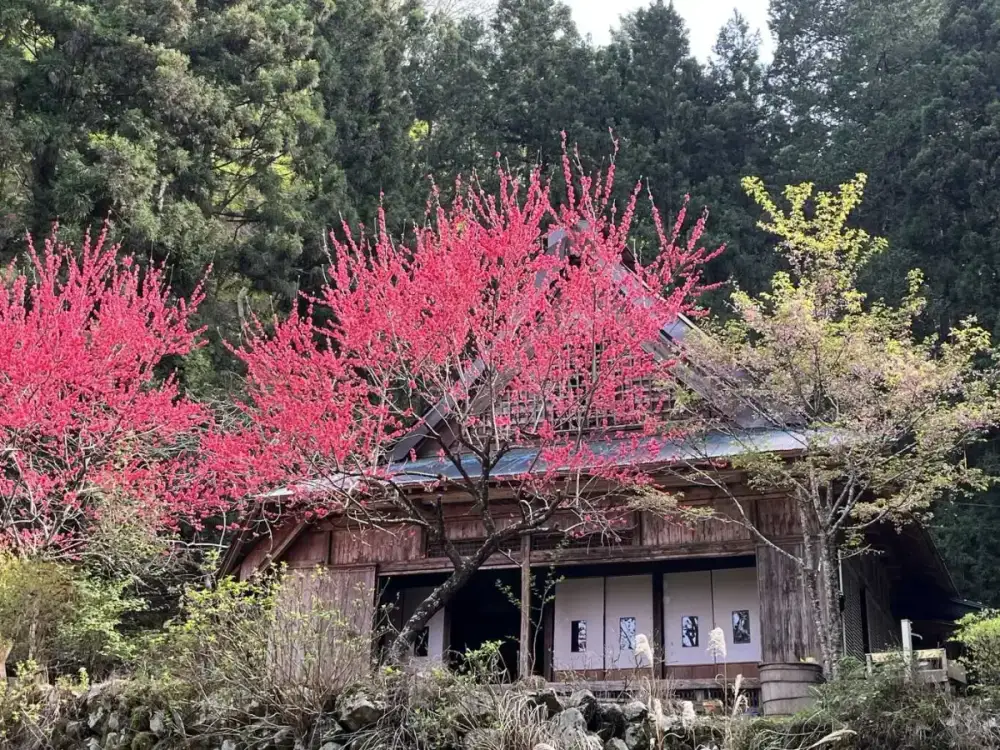
Private Camp TSUMUGI
プライベートキャンプ場 紬(TSUMUGI)
Hinohara
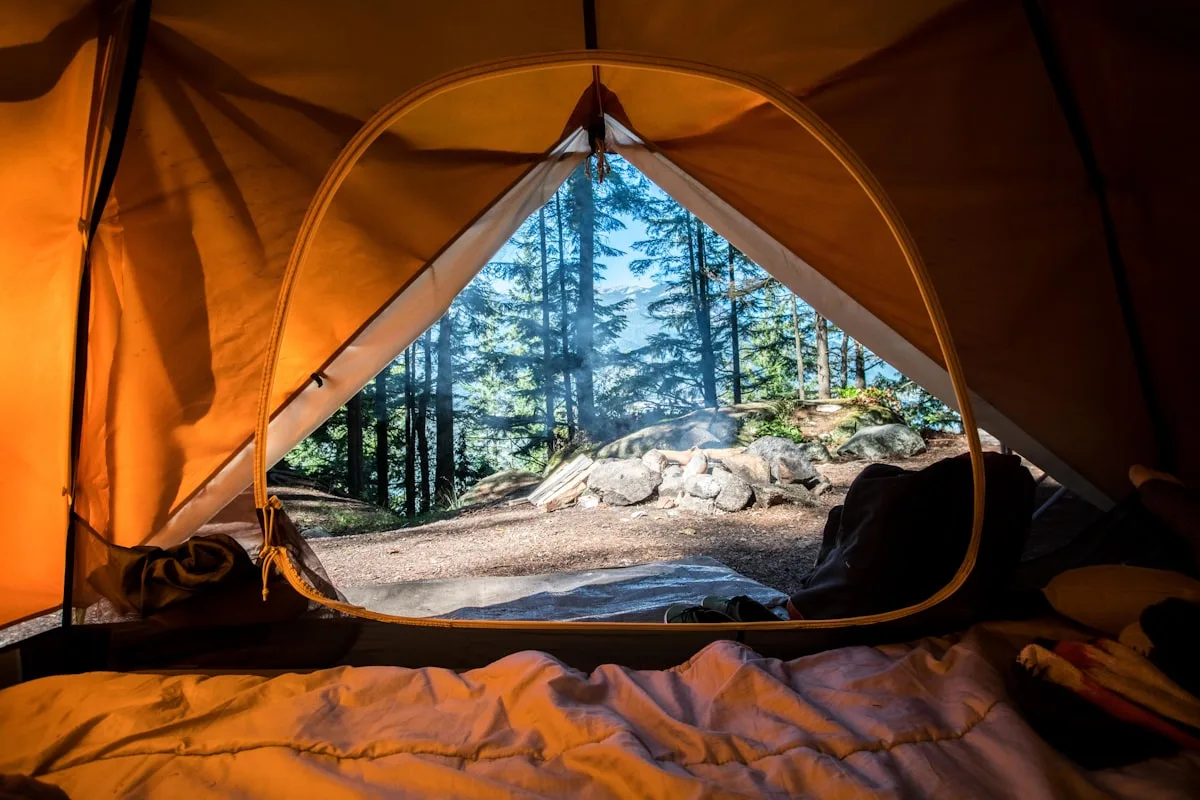
Hatoyama Aikyou No Sato Campground
はとやま愛郷の里キャンプ場
Hatoyama
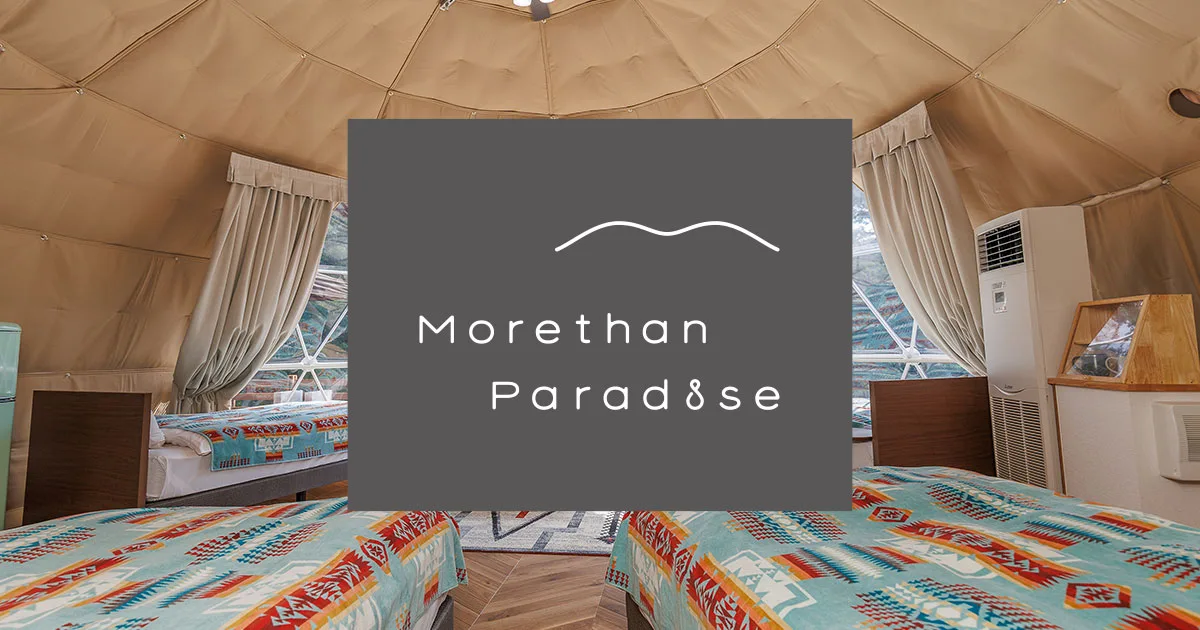
Morethan Paradise
Nagatoro
Poseidon Glamping
ポセイドン グランピング
Kujukuri
Hokizawaso Glamping Area Moku
箒沢荘グランピングエリア杢
Yamakita
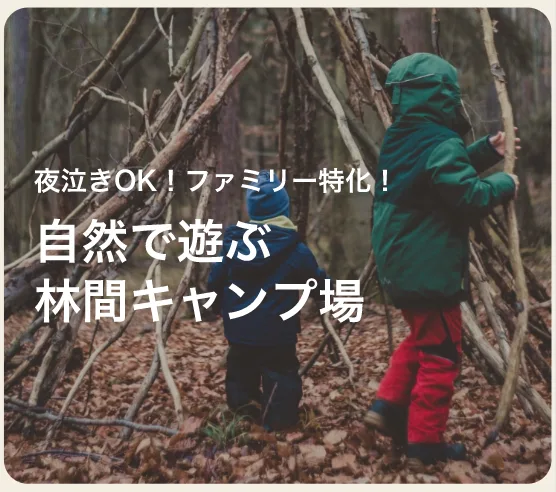
Risukko Family Campground
リスッコ・ファミリーキャンプ場
Katsuura
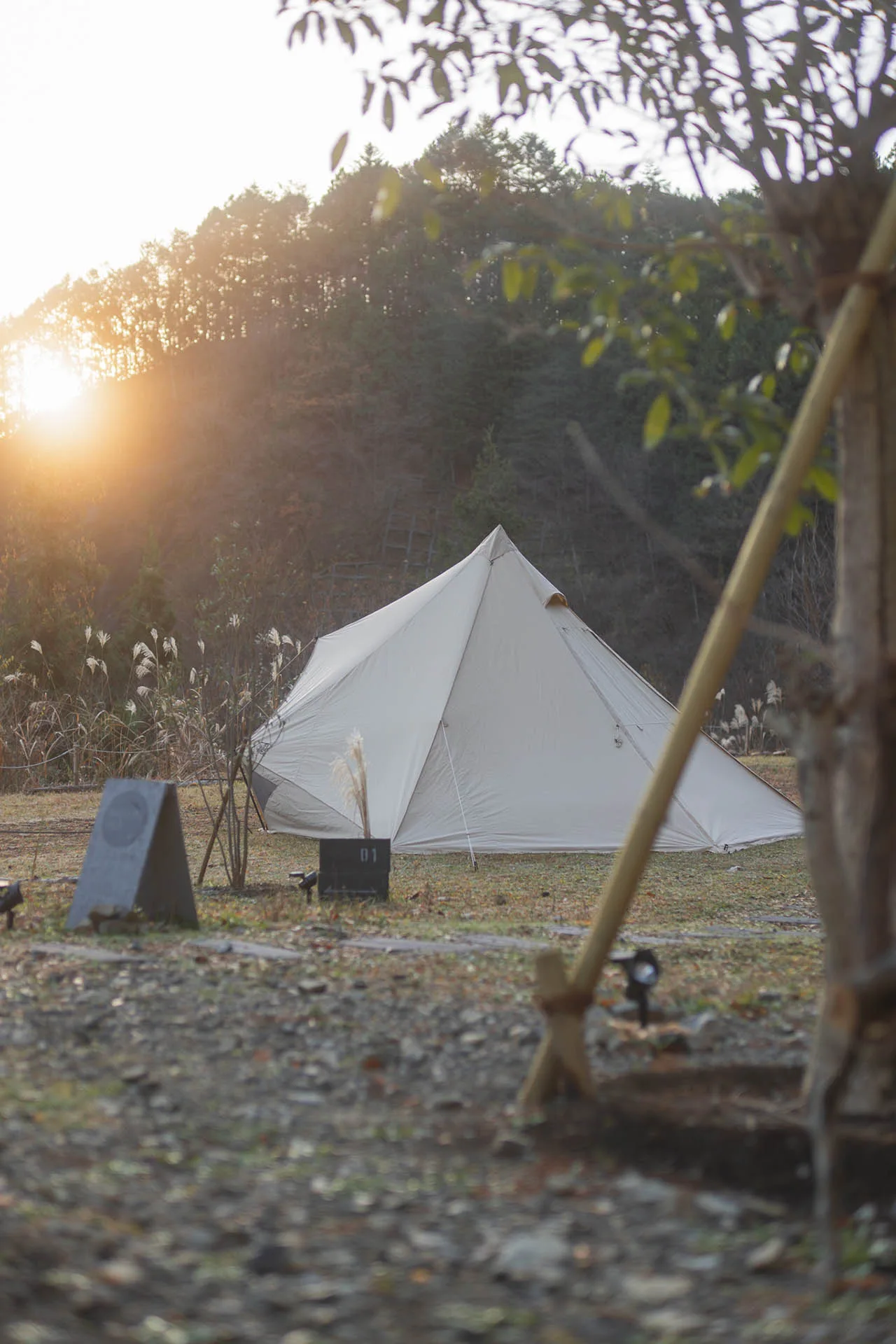
Tonaka
TONAKA
Hinohara
Atsugi Iiyama Campsite
あつぎ飯山キャンプ場
Atsugi

Camp Bancho Riders Base 99
キャンプ番長ライダースベース99
Sosa
Best glamping by region
Japan's glamping scene extends far beyond the Tokyo area. Here is a regional overview of the best glamping destinations across the country.
Kanto (Tokyo, Kanagawa, Chiba, Saitama)
The densest concentration of glamping sites in Japan, driven by Tokyo's massive weekend-trip market. Kanagawa stands out with coastal glamping in Yugawara and Manazuru, mountain glamping in Hakone and Tanzawa, and seaside glamping in Yokosuka. Couscous Glamping Manazuru offers stunning ocean views from its hillside domes, while The CLIFF CAMP & BBQ in Yokosuka sits right on the coast.
Chiba is rapidly emerging as a glamping hotspot, especially along the Boso Peninsula. The Forest Garden KIMINOMORI in Kimitsu and High Garden are excellent examples of Chiba's forest glamping offerings. Saitama's Chichibu area offers mountain river glamping with easy train access from Ikebukuro, including the atmospheric Kurochan Free Camp Site.
Chubu (Yamanashi, Nagano, Shizuoka)
This region offers glamping with Japan's most dramatic mountain scenery. Yamanashi is Mt. Fuji glamping territory — multiple high-end facilities around Lake Kawaguchi and Lake Yamanaka offer dome tents with unobstructed Fuji views. Nagano provides highland glamping in Karuizawa and the Japanese Alps, where summer temperatures stay comfortable even in August. Shizuoka's Izu Peninsula combines ocean glamping with some of Japan's best onsen.
Kansai (Kyoto, Osaka, Hyogo)
Glamping near Kyoto has grown significantly, with facilities in the Tamba highlands offering forest retreats within 90 minutes of the city. The Awaji Island area between Osaka and Shikoku has become a glamping hub, with resort-style facilities overlooking the Seto Inland Sea. Hyogo's northern coast along the Sea of Japan provides dramatic coastal glamping.
Kyushu and Okinawa
Southern Japan offers glamping in subtropical settings. Okinawa's beach glamping puts you on white sand with turquoise water. Kumamoto and Oita in Kyushu combine glamping with the region's famous onsen culture — Beppu and Yufuin area facilities offer volcanic hot spring baths alongside luxury tents.
Hokkaido and Tohoku
Northern Japan's glamping season is shorter but spectacular. Hokkaido offers glamping amid vast landscapes — lavender fields in Furano, lakeside sites at Lake Toya, and forest retreats in Niseko. Tohoku's Akita and Aomori prefectures provide remote, uncrowded glamping with autumn foliage that rivals anywhere in Japan.
Glamping with onsen (hot springs)
The combination of glamping and onsen is uniquely Japanese and arguably the best way to experience luxury camping in this country. After a day of outdoor activities and a BBQ dinner under the stars, sinking into a natural hot spring bath is the perfect ending.
There are two main types of onsen glamping experiences:
- On-site private baths (貸切風呂) — Some glamping sites have their own hot spring facilities. These range from shared gender-separated baths to fully private open-air baths attached to individual glamping units. Hokizawaso Glamping Area Moku in Tanzawa, Kanagawa, offers private hot spring access in a secluded mountain setting.
- Nearby onsen facilities — Many glamping sites are deliberately located near public onsen. Hakone is the prime example, where virtually every glamping facility is within walking distance of natural hot springs. See our Hot Spring Campgrounds guide for more options.
Top-rated glamping sites with onsen access:
Private Camp TSUMUGI
プライベートキャンプ場 紬(TSUMUGI)
Hinohara
Hatoyama Aikyou No Sato Campground
はとやま愛郷の里キャンプ場
Hatoyama
Morethan Paradise
Nagatoro
Poseidon Glamping
ポセイドン グランピング
Kujukuri
Hokizawaso Glamping Area Moku
箒沢荘グランピングエリア杢
Yamakita
Risukko Family Campground
リスッコ・ファミリーキャンプ場
Katsuura
Pet-friendly glamping in Japan
Traveling with a dog in Japan can be challenging — most hotels and ryokan don't allow pets. Glamping sites are a notable exception. A growing number of Japanese glamping facilities welcome dogs, and some are specifically designed around pet owners.
Pet-friendly glamping in Japan typically means:
- Enclosed outdoor areas — Fenced decks or dog runs so your pet can roam safely.
- Pet-specific units — Designated glamping tents or cabins with durable flooring and pet amenities.
- Size and breed restrictions — Most sites have weight limits (often under 10kg or 20kg). Always confirm before booking.
- Extra fees — Pet surcharges typically range from ¥1,000 to ¥5,000 per night.
Notable pet-friendly glamping sites include THEATER 1 in Hinohara Village (a fully private estate so your dog has free range), WOODLAND BOTHY in Akiruno (forest glamping with dog-friendly trails), and BEE CAMP FIELD in Ichihara, Chiba (a honey farm campground with spacious pet-allowed sites). For a full list, see our pet-friendly campgrounds directory.
What to expect: pricing, amenities, and food
Pricing
Japanese glamping pricing varies widely based on season, day of week, and accommodation type. Here is a general guide:
| Accommodation Type | Weekday (per night) | Weekend (per night) |
|---|---|---|
| Basic dome tent | ¥15,000 - ¥25,000 | ¥25,000 - ¥40,000 |
| Bell / safari tent | ¥12,000 - ¥22,000 | ¥20,000 - ¥35,000 |
| Luxury cabin / cottage | ¥18,000 - ¥35,000 | ¥30,000 - ¥55,000 |
| Treehouse | ¥25,000 - ¥45,000 | ¥40,000 - ¥70,000 |
| Private estate | ¥50,000 - ¥80,000 | ¥70,000 - ¥120,000+ |
Most prices are quoted per room or per unit rather than per person. Meal plans (BBQ dinner + breakfast) add ¥3,000-¥8,000 per person. Many sites offer a "teshura" all-inclusive plan that bundles accommodation, meals, drinks, and equipment.
Standard amenities
Japanese glamping facilities typically provide far more than Western equivalents. Standard inclusions at most mid-range to premium sites:
- Proper beds with duvets, pillows, and clean linens
- Air conditioning and/or heating (crucial for Japan's humid summers)
- Towels, toothbrushes, pajamas (ryokan-style hospitality)
- BBQ grill and full cooking equipment
- Premium meat and vegetable sets (often featuring wagyu beef)
- Campfire pit with firewood
- Private bathroom or shared shower/toilet facilities
- Power outlets and sometimes Wi-Fi
Food and dining
Food is a major part of the Japanese glamping experience. BBQ is the dominant meal format, and sites take it seriously — pre-cut wagyu beef, fresh seafood, seasonal vegetables, and Japanese-style sauces are standard at premium facilities. Many sites also offer:
- Breakfast sets — Hot sandwiches, soup, coffee, and fruit served at your tent or a communal area.
- Pizza and bread-making — Wood-fired pizza ovens are increasingly common at glamping resorts.
- Marshmallow roasting kits — The Japanese take on s'mores, usually with chocolate fondue.
- Local specialties — Some sites partner with local farms and fisheries for regional ingredients.
How to book glamping in Japan
Booking is the single biggest hurdle for foreign visitors. Most glamping sites use Japanese-only reservation systems. Here are your options, from easiest to most involved:
1. English-supported booking platforms
A few platforms offer some English support:
- Booking.com — Some larger glamping resorts list here. Limited selection but fully English.
- Rakuten Travel — Has an English interface. More listings than Booking.com for glamping.
- Jalan.net — Japan's largest travel booking site. Japanese-only, but Chrome Translate works well.
2. Direct booking (Japanese sites)
Most glamping sites prefer direct bookings through their own websites. These are almost always Japanese-only. The process typically involves:
- Selecting a date on a calendar
- Choosing an accommodation type and meal plan
- Entering guest information (name, phone, email)
- Paying by credit card or selecting "pay on arrival"
Use Google Translate's camera feature on your phone to translate the booking form in real time. For a step-by-step walkthrough, see our guide on how to book a Japanese campground without speaking Japanese.
3. nap-camp (なっぷ)
nap-camp is Japan's largest campground booking platform, with hundreds of glamping listings. It is entirely in Japanese but has a consistent booking flow that's manageable with translation tools. Many of the campgrounds in our directory link to their nap-camp page for booking.
Booking tips
- Book 2-3 months ahead for summer weekends and autumn foliage season.
- Weekday stays are 30-50% cheaper and much easier to book.
- Cancellation policies are strict. Most sites charge 50-100% for cancellations within 3-7 days.
- Check-in windows are rigid — typically 14:00-17:00. Late arrival may forfeit your booking.
- Payment — Many sites are cash-only for on-site payments, even if you paid online. Bring yen.
JaCamp Booking Assistance
Need help booking a glamping stay in Japan?
Glamping sites often use package-style pricing with Japanese-only booking forms. JaCamp can help you navigate the reservation process and avoid costly misunderstandings.
Why this helps
- - Translate booking forms and confirm actual package inclusions.
- - Verify check-in constraints, pet policies, and meal options before paying.
- - Get help choosing the right site for your group size and preferences.
Seasonal guide to glamping in Japan
Spring (March - May)
One of the best seasons for glamping. Cherry blossom season (late March to mid-April) adds stunning scenery to outdoor stays. Temperatures are mild (15-22°C), and sites are less crowded than summer. Golden Week (late April to early May) is the major exception — book months in advance or avoid this holiday period entirely. Spring is ideal for glamping in Chiba, Kanagawa, and Shizuoka.
Summer (June - August)
Peak glamping season and peak prices. June brings the rainy season (tsuyu) to most of Japan — many sites offer rain-day discounts. July and August are hot and humid at lower elevations (35°C+), making highland glamping in Nagano and mountain sites near Tokyo particularly attractive. Summer is prime time for river glamping and water activities. The cicada chorus and summer fireworks festivals add atmosphere, but be prepared for insects.
Autumn (September - November)
Arguably the best overall season. Comfortable temperatures (15-25°C), spectacular autumn foliage (koyo), and crisp air make every glamping stay memorable. October and November weekends in popular foliage areas like Hakone, Nikko, and Karuizawa sell out quickly. This is the ideal time for onsen glamping — the combination of cool autumn air and hot spring water is sublime.
Winter (December - February)
The hidden gem of glamping seasons. Prices drop 40-60%, crowds disappear, and the air is crystal clear. Winter glamping works best at sites with heated accommodations and onsen access. Snow glamping in Nagano and Hokkaido is a growing niche. The cold air makes onsen baths even more rewarding. Read our Winter Glamping guide for detailed recommendations.
Frequently asked questions
How much does glamping cost in Japan?
Glamping in Japan typically costs between ¥15,000 and ¥50,000 per night for two people. Basic dome tents and cabins start around ¥15,000, while premium private estates with onsen and meals can exceed ¥80,000. Weekday rates are usually 30-50% cheaper than weekends.
Do I need to bring anything to a glamping site in Japan?
Most glamping sites provide everything — bedding, towels, toiletries, and BBQ equipment. You typically just need personal items and a change of clothes. Some sites even provide pajamas and slippers. Check your specific booking for what is included.
Can I go glamping in Japan without speaking Japanese?
Yes, glamping is one of the most accessible outdoor experiences for non-Japanese speakers. Many luxury glamping sites have some English support, and the all-inclusive nature means less communication is needed compared to traditional campgrounds. Booking can still be tricky — use Google Translate or see our booking guide for help.
What is the best season for glamping in Japan?
Spring (April-May) and autumn (October-November) offer the best weather and scenery. Summer (July-August) is the most popular but also the hottest and most expensive. Winter glamping is growing in popularity, especially at sites with onsen and heated accommodations, and offers the lowest prices.
Is glamping in Japan good for families with children?
Absolutely. Japanese glamping sites are generally very family-friendly, with safe enclosed areas, kids activities like river play and bug catching, and meal plans that cater to children. Many sites also offer barrier-free access. The no-gear-needed aspect makes it much easier than tent camping with young kids.
What is the difference between glamping and a cabin or cottage in Japan?
Glamping in Japan usually refers to staying in furnished luxury tents (bell tents, dome tents, or safari tents), often with transparent walls or open-air elements. Cabins and cottages are permanent wooden structures. In practice, many Japanese glamping resorts offer both options, and the line between them is blurry. The key distinction is that glamping emphasizes an outdoor-connected experience with hotel-level comfort.